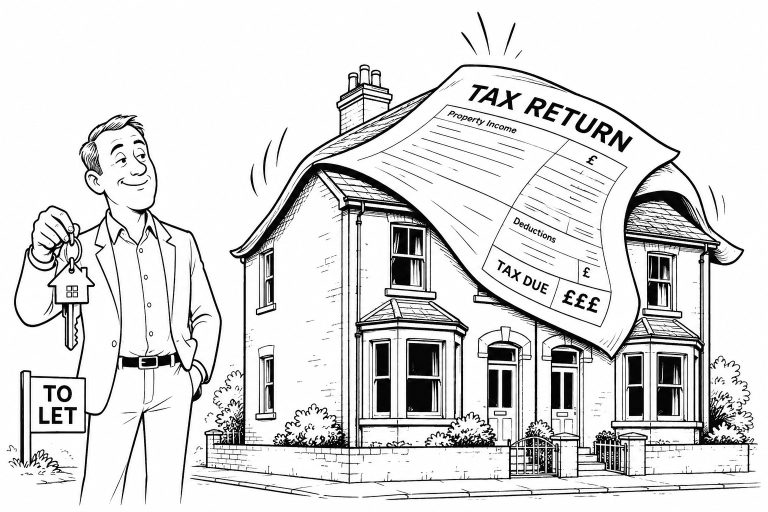
Section 24 of the Finance Act 2015 is the single most important tax rule for landlords – and most still don’t understand it fully.
If you own a rental property with a mortgage, Section 24 is costing you thousands of pounds in tax every year. Let me explain exactly how it works, who it hurts most, and when moving to a limited company actually isn’t the answer.
What Is Section 24?
Section 24 stops you from deducting mortgage interest from your rental income when calculating tax.
Before April 2020:
Rental income minus mortgage interest minus other expenses = profit you pay tax on
From April 2020 onwards:
Rental income minus other expenses (not mortgage interest) = profit you pay tax on
Then after calculating tax, you get a 20% credit for the mortgage interest you paid.
That’s it. That’s the change. But it’s massive.
Why Was It Introduced?
The government introduced Section 24 in 2015 to cool the property market and level the playing field for first-time buyers.
The logic: Landlords could deduct mortgage interest at their personal tax rate (20-45%), making property investment very attractive. First-time buyers couldn’t get any relief on their mortgages. So landlords had an unfair advantage.
Solution: Remove mortgage interest relief for landlords. Make property investment less attractive. Free up more houses for owner-occupiers.
Whether it worked is debatable. What’s certain: landlords’ tax bills increased significantly, especially higher-rate taxpayers.
How Much Does Section 24 Actually Cost You?
The same property. Three different taxpayers. Three different outcomes.
Property details:
| Item | Amount |
|---|---|
| Rental income | £20,000/year |
| Mortgage interest | £10,000/year |
| Other expenses | £2,000/year |
| Net cash profit (after mortgage) | £8,000/year |
Basic Rate Taxpayer (20%)
| Calculation | Old System (pre-2020) | New System (2020 onwards) | Change |
|---|---|---|---|
| Rental income | £20,000 | £20,000 | – |
| Less: Mortgage interest | -£10,000 | £0 | – |
| Less: Other expenses | -£2,000 | -£2,000 | – |
| Taxable profit | £8,000 | £18,000 | – |
| Tax at 20% | £1,600 | £3,600 | – |
| Less: 20% mortgage credit | – | -£2,000 | – |
| Final tax bill | £1,600 | £1,600 | No change |
Higher Rate Taxpayer (40%)
| Calculation | Old System (pre-2020) | New System (2020 onwards) | Change |
|---|---|---|---|
| Taxable profit | £8,000 | £18,000 | – |
| Tax at 40% | £3,200 | £7,200 | – |
| Less: 20% mortgage credit | – | -£2,000 | – |
| Final tax bill | £3,200 | £5,200 | +£2,000 (+62.5%) |
Additional Rate Taxpayer (45%)
| Calculation | Old System (pre-2020) | New System (2020 onwards) | Change |
|---|---|---|---|
| Taxable profit | £8,000 | £18,000 | – |
| Tax at 45% | £3,600 | £8,100 | – |
| Less: 20% mortgage credit | – | -£2,000 | – |
| Final tax bill | £3,600 | £6,100 | +£2,500 (+69%) |
The pattern is clear: The higher you earn, the more Section 24 costs you.
The Worst Case: Tax Bill Exceeding Cash Profit
This is where Section 24 gets genuinely painful.
| Item | Amount |
|---|---|
| Rental income | £12,000/year |
| Mortgage interest | £10,000/year |
| Other expenses | £1,500/year |
| Net cash profit | £500/year |
Higher-rate taxpayer (40%):
| Calculation | Amount |
|---|---|
| Taxable profit (income minus non-interest expenses) | £10,500 |
| Tax at 40% | £4,200 |
| Less: 20% mortgage credit | -£2,000 |
| Final tax bill | £2,200 |
| Actual cash profit | £500 |
| Tax as multiple of cash profit | 4.4x |
Your tax bill (£2,200) is 4.4 times bigger than your cash profit. You need savings or other income to pay it.
Limited Companies Offer An Escape – But With Conditions
Same property, same scenario, but in a limited company:
| Calculation | Personal Ownership | Limited Company |
|---|---|---|
| Rental income | £12,000 | £12,000 |
| Less: Mortgage interest | £0 | -£10,000 |
| Less: Other expenses | -£1,500 | -£1,500 |
| Taxable profit | £10,500 | £500 |
| Tax/Corp tax | £4,200 @ 40% | £95 @ 19% |
| Less: 20% mortgage credit | -£2,000 | – |
| Tax bill before extraction | £2,200 | £95 |
| Extract as dividend | – | £405 |
| Dividend tax @ 33.75% | – | -£128 |
| Total tax paid | £2,200 | £223 |
| Saving | – | £1,977/year |
Incorporation looks brilliant. But here’s the honest part: it’s not always worth it.
When Moving to a Limited Company ISN’T Worth It
Transfer Costs Kill The Savings
If you already own the property and want to move it:
| Cost | Amount |
|---|---|
| Stamp duty (5% of £300,000 value) | £15,000 |
| Capital gains tax (24% of £100,000 gain) | £24,000 |
| Legal fees | £2,000 |
| Total transfer cost | £41,000 |
| Annual tax saving (estimated) | £2,000 |
| Years to break even | 20+ years |
Most landlords won’t hold for 20 years. Better approach: Keep existing properties personal, buy new ones in a company.
Higher Mortgage Costs Eat The Savings
| Item | Personal | Company | Difference |
|---|---|---|---|
| Mortgage rate | 4.5% | 5.5% | +1% |
| Annual interest on £200,000 | £9,000 | £11,000 | +£2,000 |
| Additional cost | – | – | -£2,000/year |
| Annual tax saving from Section 24 relief | – | – | £1,977 |
| Net benefit | – | – | -£23 |
On this example, the higher mortgage cost outweighs the tax saving.
When Limited Company DOES Make Sense
| Situation | Works? |
|---|---|
| Building a portfolio, reinvesting profits | ✓ Yes |
| Large mortgages (£15,000+/year interest), earning 40%+ | ✓ Yes |
| Buying new properties going forward (no transfer costs) | ✓ Yes |
| Earning basic rate (20%), small mortgages | ✗ Probably No |
| Planning to sell in 5 years | ✗ Probably No |
| Hate admin and complexity | ✗ Probably No |
| Already own properties, considering transfer | ✗ Probably no |
The Bottom Line
Section 24 costs higher-rate taxpayers significantly. Limited companies can reduce this. But they come with real costs:
| Factor | Cost/Impact |
|---|---|
| Higher mortgage rates | 0.5-1% extra (£1,000-2,000/year on £200k) |
| Higher accounting fees | £350-1,250 more per year |
| Transfer costs (existing properties) | £40,000+ per property |
| Admin complexity | Significant |
For some landlords, incorporation saves thousands annually.
For others, the costs outweigh the benefits.
The answer depends on your specific situation – mortgage size, number of properties, tax rate, timeline, whether you’re reinvesting or extracting.
Don’t let anyone push you toward incorporation just because Section 24 exists. Model your specific numbers first.
Sometimes the best solution is staying personal and accepting Section 24. Sometimes it’s incorporation. Often it’s a mix – personal for old properties, company for new ones.
Get proper advice based on YOUR situation, not generic “Section 24 is bad so incorporate” logic.
Frequently Asked Questions
What exactly is Section 24?
It restricts mortgage interest relief for individual landlords. You get only a 20% tax credit on mortgage interest instead of deducting it fully. It’s been fully in effect since April 2020 and applies to residential lettings (but not commercial property).
How much does Section 24 cost me?
As a 40% taxpayer, roughly £2,000/year per £10,000 mortgage interest. As a 45% taxpayer, roughly £2,500/year per £10,000. Basic-rate taxpayers are largely unaffected.
Should I move to a limited company?
Not automatically. Calculate your real costs first – transfer costs, higher mortgage rates, higher accounting fees. For existing properties, it often doesn’t stack up. For new purchases, it might. Model your specific numbers before deciding.
Can Section 24 ever be reversed?
The government has confirmed (as of late 2025) no plans to change it. It’s been law for over 6 years. Plan on it being permanent.
Does Section 24 apply to holiday lets?
Yes, from April 2025. The FHL regime was abolished and holiday lets now face the same Section 24 restrictions as standard residential lettings.
Need help understanding Section 24 for your actual situation? We can model your real numbers, calculate genuine savings from incorporation (or show you why it’s not worth it), and structure your properties in the way that actually makes sense for you – not just the generic “everyone should incorporate” advice.
“Disclaimer: Paul Stankiewicz is the owner and principal at Paul Marks & Co Chartered Accountants which is the trading name of Paul Marks Ltd a Limited Company registered in England and Wales (registered number 4487645).This article is designed for the information of readers only and is the opinion of the author only. Readers should not act on any of the information contained in this article without seeking professional advice. Nothing in this article constitutes advice, nor does the transmission, downloading or sending of any information or the Material create any contractual relationship. Links to third party websites are provided as a convenience to the reader, Paul Marks Ltd does not control and is not responsible for any of those websites or their content. Paul Stankiewicz and Paul Marks Ltd accepts no liability or responsibility whatsoever for any loss or damage suffered by any user of the information contained on or accessed through this article or the Material downloaded.