Note: This article covers VAT on rental income from letting properties. VAT on property development, construction, new builds, renovations, and property sales is covered separately – those rules are completely different.
VAT on Rental Property: When You Pay It and When You Don’t – UK Guide 2025/26
VAT on property confuses most landlords. The rules are counterintuitive, they changed recently, and getting them wrong can be expensive.
Most landlords assume they don’t pay VAT on rental income. For residential lettings, that’s usually right. But there are important exceptions – and if you hit them without understanding VAT, you could owe HMRC thousands.
Let me explain when VAT applies to property, when it doesn’t, and what changed in April 2025.
What Is VAT on Property?
VAT (Value Added Tax) is a sales tax added to goods and services. Standard rate is 20%.
For property, the rules are unusual because residential lettings are “exempt” supplies – you don’t charge VAT to tenants and can’t recover VAT you pay.
But for commercial property, VAT definitely applies.
Key question: What type of property are you letting?
Residential Property – VAT Exempt
Residential lettings (normal buy-to-let) are VAT exempt.
This means:
• You don’t charge VAT to your tenants on rent
• You can’t recover VAT on expenses (repairs, insurance, etc.)
• You never need to register for VAT
Example: Residential Rent
| Item | Amount |
|---|---|
| Monthly rent (tenant pays) | £1,000 |
| VAT charged to tenant | £0 |
| Total tenant pays | £1,000 |
| VAT treatment | Exempt |
| Must register for VAT? | No |
This applies to:
• Residential flats
• Houses
• Cottages
• Bedsits
• Multi-unit residential buildings
This is true regardless of turnover. Whether you have one property or fifty properties generating £200,000 a year in rental income, residential lettings are always VAT exempt.
Commercial Property – Standard Rated VAT
Commercial lettings ARE subject to VAT at 20%.
This includes:
• Office space
• Retail shops
• Warehouses
• Industrial premises
• Storage units
• Land (usually)
Example: Commercial Property Rent
| Item | Amount |
|---|---|
| Annual rent (before VAT) | £10,000 |
| VAT at 20% | £2,000 |
| Tenant pays total | £12,000 |
| You register for VAT? | Yes (if over £90,000 turnover) |
| Can you recover VAT on expenses? | Yes |
You register for VAT and:
• Charge tenants 20% VAT
• Recover VAT on your expenses (repairs, insurance, management fees, etc.)
Registration threshold for commercial property:
If your commercial lettings income exceeds £90,000 in a rolling 12-month period, you must register for VAT.
If commercial property income is below £90,000, registration is optional (but often beneficial because you can recover VAT).
What Changed in April 2025: Furnished Holiday Lettings
This is the important change most landlords haven’t fully grasped.
Furnished Holiday Lettings – Before and After April 2025
| Aspect | Before April 2025 | From April 2025 |
|---|---|---|
| VAT treatment | Standard rated (20%) | VAT exempt |
| Can you charge VAT to guests? | Yes | No |
| Can you recover VAT on expenses? | Yes | No |
| Must register for VAT? | Yes (if turnover over £90k) | No |
| Tax efficiency | Could recover VAT on costs | Can’t recover VAT on costs |
| Mortgage interest relief | Not subject to Section 24 | Now subject to Section 24 |
Before April 2025:
| Annual turnover | VAT charged | VAT recovered on expenses | Net cost |
|---|---|---|---|
| £95,000 guest income | £19,000 | £3,000 (on £15,000 expenses) | Recovering VAT reduced costs |
From April 2025:
| Annual turnover | VAT charged | VAT recovered on expenses | Net cost |
|---|---|---|---|
| £95,000 guest income | £0 | £0 (can’t recover) | Significantly higher costs |
Impact: Holiday let owners can no longer charge VAT to guests and can’t recover VAT on repairs, cleaning, furnishings, etc. This increases costs significantly.
This is on top of the Section 24 mortgage interest restrictions that also now apply to FHLs.
Holiday lets just got much less tax-efficient.
Can You Recover VAT on Property Expenses?
Short answer: Only if the property is commercial.
VAT Recovery on Typical Landlord Expenses
| Expense | Residential Property | Commercial Property |
|---|---|---|
| Repairs and maintenance | ✗ Can’t recover | ✓ Can recover |
| Buildings insurance | ✗ Can’t recover | ✗ Depends on insurer |
| Boiler replacement | ✗ Can’t recover | ✓ Can recover |
| Plumbing and electrical | ✗ Can’t recover | ✓ Can recover |
| Management fees | ✗ Can’t recover | ✓ Can recover |
| Professional fees (accounting, legal) | ✗ Can’t recover | ✓ Can recover |
| Furnished holiday let expenses (April 2025+) | ✗ Can’t recover | N/A |
Real Cost Comparison: Repairs Example
You need to repair a broken boiler. Cost from contractor: £1,200 + VAT (£240).
| Scenario | Property Type | Total Cost | What You Claim | VAT Paid | Effective Cost |
|---|---|---|---|---|---|
| Example A | Residential | £1,440 | £1,200 | £240 (no recovery) | £1,440 |
| Example B | Commercial | £1,440 | £1,200 | £240 (recovered) | £1,200 |
| Difference | – | – | – | – | £240 more for residential |
This compounds across all your expenses. Over a year with multiple repairs, the VAT you can’t recover on residential becomes significant.
Another Example: Annual Expenses
You let both residential and commercial properties. Annual expenses:
| Cost Item | Amount ex-VAT | VAT (20%) | Total Cost | Recoverable (Commercial)? | Recoverable (Residential)? |
|---|---|---|---|---|---|
| Repairs | £5,000 | £1,000 | £6,000 | ✓ Yes | ✗ No |
| Insurance | £2,000 | £400 | £2,400 | ✗ Varies | ✗ No |
| Management | £3,000 | £600 | £3,600 | ✓ Yes | ✗ No |
| Professional fees | £1,500 | £300 | £1,800 | ✓ Yes | ✗ No |
| Total | £11,500 | £2,300 | £13,800 | £1,900 recovered | £0 recovered |
| Net cost to you | – | – | – | £11,900 | £13,800 |
The commercial property costs £1,900 less because you recover VAT. The residential property, you pay the full VAT amount.
Mixed Use Properties
If you have a property with residential and commercial elements (e.g., flat above a shop), you need to split the VAT treatment:
Mixed Use Property Example
| Element | Type | VAT Treatment | Charge VAT to Tenant? | Can Recover VAT? |
|---|---|---|---|---|
| Ground floor | Retail shop | Commercial (standard rated) | Yes – £2,000/year VAT | Yes – recover VAT on expenses |
| Flat above | Residential letting | VAT exempt | No | No |
You’ll register for VAT for the commercial part and apportion expenses between the two.
This gets complex. Get specialist advice if you have mixed-use properties.
Common Mistakes Landlords Make
Mistake 1: VAT on Repairs
| Mistake | Reality | Cost |
|---|---|---|
| “Residential landlords don’t need to think about VAT” | You pay VAT on repairs but can’t recover it | £1,000s annually if multiple repairs |
| “I can claim back the VAT on repairs” | Only for commercial | Expecting recovery you can’t get |
Mistake 2: Holiday Let Confusion
| Assumption | Reality (April 2025+) | Impact |
|---|---|---|
| “Holiday lets are like hotels – standard rated” | FHL regime abolished – now treated as residential | Can’t charge VAT, can’t recover costs |
| “I can still recover VAT on cleaning and furnishings” | Not anymore | Significant cost increase |
Mistake 3: Registration Delays
| Scenario | What Should Happen | Mistake | Penalty |
|---|---|---|---|
| Commercial lettings exceed £90,000 turnover | Register for VAT immediately | Delay registration | HMRC charges penalties |
| Deliberately not registering when required | Must register at £90k threshold | Ignoring requirement | Back-dated VAT + interest + penalties |
The Bottom Line
VAT Summary Table
| Property Type | VAT Exempt or Rated? | Charge VAT to Tenant? | Recover VAT on Expenses? | Must Register? | Typical Cost Impact |
|---|---|---|---|---|---|
| Residential lettings | Exempt | No | No | Never | Higher – VAT not recovered |
| Commercial lettings | Standard rated (20%) | Yes | Yes | If over £90k | Lower – VAT recovered |
| Furnished holiday lets (pre-April 2025) | Standard rated | Yes | Yes | Yes (if over £90k) | Lower – VAT recovered |
| Furnished holiday lets (from April 2025) | Exempt | No | No | Never | Higher – VAT not recovered |
| Mixed residential/commercial | Both (split treatment) | Depends on element | Depends on element | If commercial over £90k | Mixed |
Key takeaway:
Residential lettings: VAT exempt. You don’t charge VAT, can’t recover VAT. No registration needed. Simple.
Commercial property: Standard rated at 20%. If turnover exceeds £90,000, register for VAT, charge tenants VAT, recover VAT on expenses.
Holiday lets (from April 2025): Now treated like residential – VAT exempt. Can’t charge VAT or recover it. No registration needed.
For most small residential landlords, VAT is a non-issue. For commercial landlords above £90,000 turnover, it’s a cost recovery opportunity. For holiday let owners as of April 2025, it’s now a cost burden.
Don’t assume your situation. Check your specific circumstances – property type, turnover.
Frequently Asked Questions
Do I charge VAT on residential property rent?
No. Residential lettings are VAT exempt. You don’t charge VAT to tenants and can’t recover VAT on expenses. This means the full VAT cost (e.g., on repairs) falls on you. This is true regardless of how much rental income you generate.
What about holiday lettings – do I charge VAT?
Not anymore. From April 2025, the FHL regime was abolished and holiday lets are now treated like residential lettings – VAT exempt. Before April 2025, FHLs were standard rated and you could charge VAT and recover costs. This change significantly increased costs for holiday let owners.
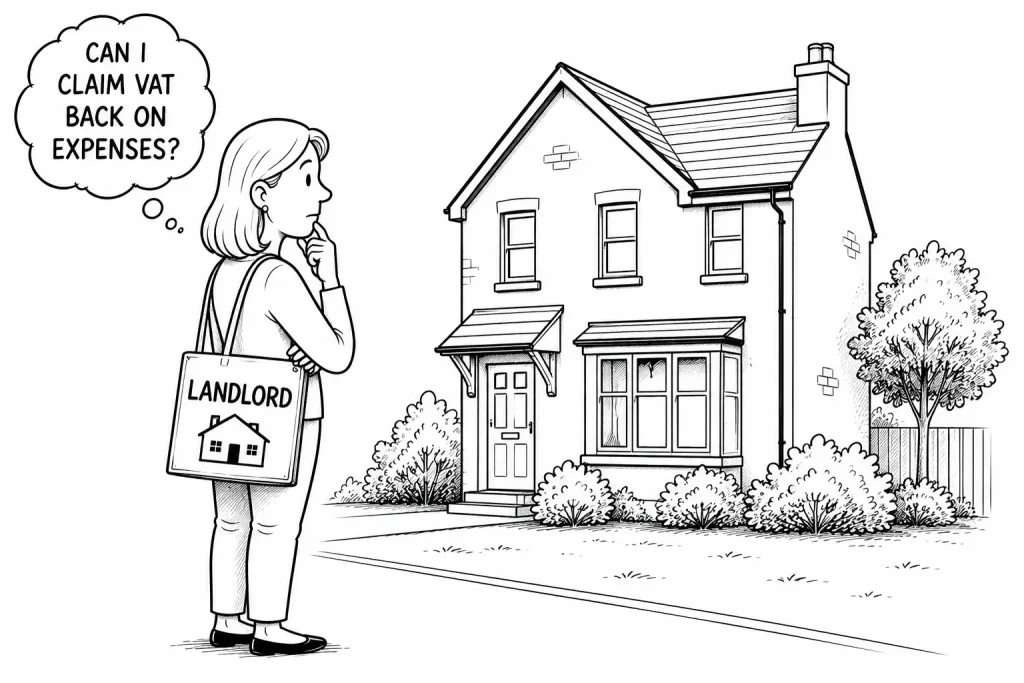
Can I recover VAT on repairs to my rental property?
Only if the property is commercial. For standard residential lettings, you pay VAT on repairs but can’t recover it. On a £1,200 repair with £240 VAT, you lose the £240 – it’s a real cost with no recovery.
Do I need to register for VAT as a landlord?
Only if you’re letting commercial property AND your turnover exceeds £90,000 in a rolling 12-month period. Residential landlords never need to register because residential lettings are VAT exempt. Holiday let owners no longer need to register (they’re now treated as residential from April 2025).
What’s the difference between residential and commercial property for VAT?
Residential is VAT exempt – you don’t charge VAT or recover it. Commercial is standard rated – you charge VAT to tenants and recover VAT on expenses. This makes commercial property potentially cheaper to own (VAT recovery) but more expensive to rent (tenants pay the extra 20%).
Am I affected by the FHL changes in April 2025?
If you let furnished holiday properties, yes. You can no longer charge VAT to guests or recover VAT on expenses. Your costs just increased significantly. You might also be affected by the new Section 24 mortgage interest restrictions that also applied to FHLs from April 2025. Holiday lets became much less tax-efficient.
Need clarity on VAT and your property situation? We can review your property type, turnover, and structure – and tell you exactly what VAT implications apply (or don’t) to your specific setup.
“Disclaimer: Paul Stankiewicz is the owner and principal at Paul Marks & Co Chartered Accountants which is the trading name of Paul Marks Ltd a Limited Company registered in England and Wales (registered number 4487645).This article is designed for the information of readers only and is the opinion of the author only. Readers should not act on any of the information contained in this article without seeking professional advice. Nothing in this article constitutes advice, nor does the transmission, downloading or sending of any information or the Material create any contractual relationship. Links to third party websites are provided as a convenience to the reader, Paul Marks Ltd does not control and is not responsible for any of those websites or their content. Paul Stankiewicz and Paul Marks Ltd accepts no liability or responsibility whatsoever for any loss or damage suffered by any user of the information contained on or accessed through this article or the Material downloaded.